REVIEW · CANCUN
Open Water Diver course PADI in Cancun
Book on Viator →Operated by Diversland Mexico · Bookable on Viator
Three days, one big underwater milestone. I love how this PADI Open Water Diver course turns a scary idea into a clear skill plan, taught by real instructors. You get full guidance from theory through pool practice and then into four ocean underwater sessions, with scuba gear and boat transportation included.
What I like most is the slow, calm teaching style I saw in the way Elana, Patrick, and the team support new students. You also benefit from hotel pickup across Cancún, Playa del Carmen, and Riviera Maya, plus all fees tied to the course and certification. One thing to consider: you’ll need to complete a health questionnaire and some conditions may keep you from participating, so check with your doctor if you have asthma, heart issues, or anything similar.
In This Review
- Key highlights worth planning for
- Why a PADI Open Water course in Cancún feels practical
- Price and value: what your $600 really covers
- Day flow: the 8:30am start and how pickup affects your energy
- Stop 1: Diversland and the first feel of the training team
- Knowledge development: theory that sets you up for success
- Pool sessions: learning control before you go out
- Stop 2: Blue Dive and what four ocean underwater sessions mean
- Gear and materials: you handle skills, not headaches
- Who should take this course, and who should double-check first
- The real takeaway: what you’re likely to gain beyond the card
- Should you book Diversland for PADI Open Water in Cancún?
- FAQ
- What certification do I earn?
- How deep can I go with this certification?
- How long is the course?
- What time does the experience start?
- Does the course include hotel pickup?
- What’s included in the price?
- Is scuba equipment included?
- Is diving insurance included?
- Is there a minimum age?
- What’s the cancellation policy?
Key highlights worth planning for
- Small group size (max 15): more time with your instructor when you’re learning control and comfort skills.
- Real name instructors and support team: Elana helped start the course, Patrick handled the main instruction with lots of patience, and Eugenia organized details.
- Theory + pool + ocean in one package: the course is built to move step-by-step, not throw you in.
- Equipment and boat included: you don’t have to scramble for gear or transportation on training days.
- PADI certification you can use worldwide: the Open Water Diver card allows you to go to depths up to 18 meters.
Why a PADI Open Water course in Cancún feels practical
Cancún is a classic place to learn scuba because it gives you a structured training format with an actual team behind it. This course is built around the PADI Open Water Diver standard, which means you’re not guessing what comes next. You’re doing a mix of knowledge development, confined water practice, and open-water skills so you gain confidence for the real thing.
I also like that the package doesn’t act like scuba is just a one-day activity. It’s designed for three days (approx.), with the right training rhythm for first-timers. That matters because comfort in the water is not a personality trait. It’s a skill you build—one drill at a time.
You can also read our reviews of more tours and experiences in Cancun.



Price and value: what your $600 really covers
At $600 per person, you’re paying for far more than a “try scuba” outing. You’re getting:
- theory instruction and practice
- pool practice and four ocean underwater sessions
- scuba equipment use
- a digital manual
- PADI Open Water Diver certification
- hotel pickup and drop-off
- bottled water, plus all fees and taxes
- a professional certified multilingual instructor
That’s the real value here: the cost bundles the parts that usually get added later—gear access, boat transportation, instruction time, and certification. You’re not trying to piece together separate providers for theory, training pool time, and open-water checkouts.
What’s not included is diving insurance (optional). If you already have coverage, great. If you don’t, consider getting it so you’re not making safety decisions based on price alone.
Day flow: the 8:30am start and how pickup affects your energy
Your day starts at 8:30am. The activity includes hotel pickup and drop-off, and it covers all hotels in Playa del Carmen, Cancún, and Riviera Maya. That means you spend less time coordinating rides and more time focusing on the course.
This matters because open-water training is mental as well as physical. You’ll do better when you arrive with a clear head, not after a rushed taxi hunt. The course also runs back to the meeting point at the end, which keeps logistics simple.
The group cap is 15 travelers, and that usually helps. Smaller groups generally mean less waiting between skills, and more chances to ask questions before you’re back on the boat or back in the water.
Stop 1: Diversland and the first feel of the training team
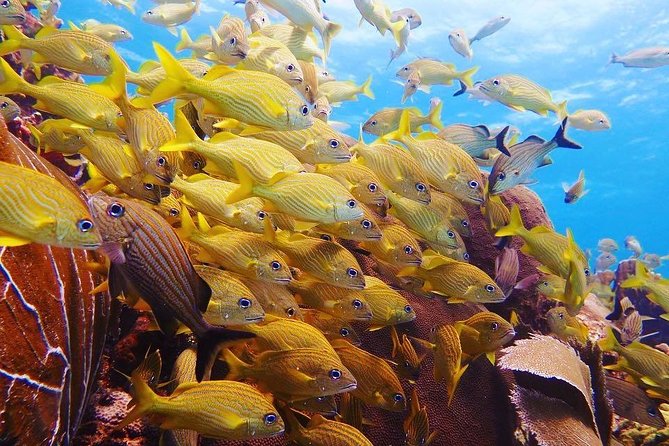
Diversland is where the course gets real. This is where you’ll connect with the staff and find out how the whole system works: instruction, gear setup, and what you’ll practice during the day.
In the reviews, I picked up that organization matters here. Eugenia is mentioned as the person who kept details running smoothly, and that’s a big deal when you’re new. When something like mask fit, buoyancy explanations, and “what do I do next” are handled confidently, you relax faster.
This is also the stage where you’re likely to get your first dose of calm coaching. Elana is specifically mentioned as a strong starter for new students, and that same vibe shows up in how Patrick was described later for the rest of the course.
Knowledge development: theory that sets you up for success
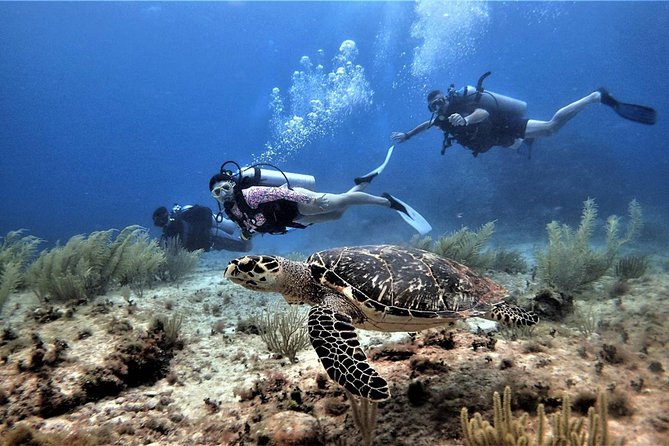
The course includes knowledge development, and you’ll handle it through online, independent study, or a classroom format (depending on how your group is scheduled). The goal isn’t memorizing random facts. It’s understanding the basics so you can make safe choices while you’re wearing equipment and thinking underwater.
For a first-time scuba student, the biggest win of the theory portion is that it reduces fear. When you understand what buoyancy is trying to do, and why you control your breathing and signals, the water stops feeling like a mystery. It becomes a place where you can follow steps.
You also get a digital manual. That’s useful because you can review key topics before the pool and again when you want to refresh your memory after a long day.


Pool sessions: learning control before you go out
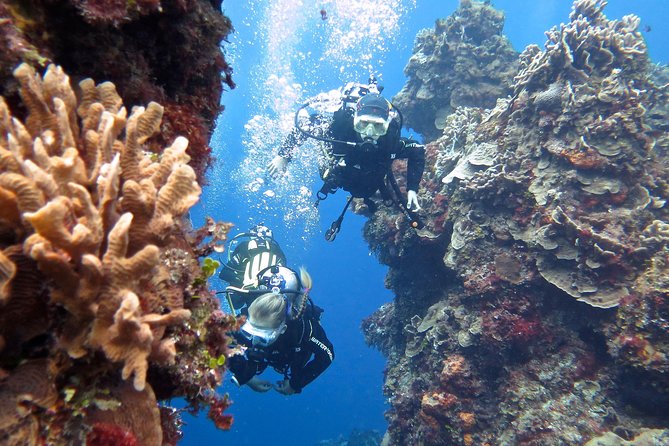
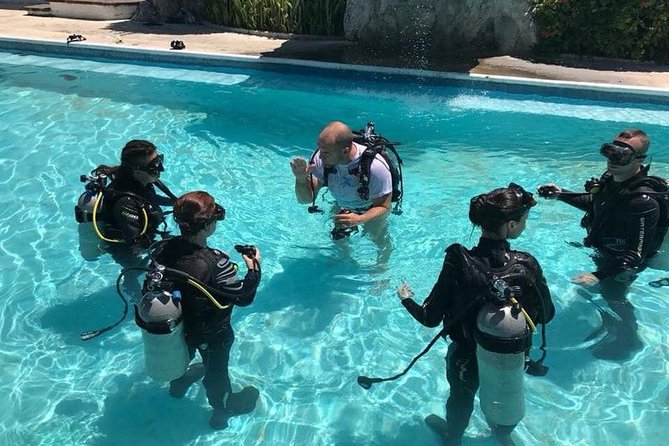
You’ll do confined water dives as part of the standard training progression. In plain terms, this is where you practice core skills in a pool or shallow, controlled area.
This part is essential. In open water, conditions can change, and you won’t have the luxury of learning from scratch while surrounded by new sights. Pool training lets you build muscle memory—things like breathing calmly, managing your gear setup, and practicing basic underwater movements—while an instructor can correct you quickly.
If you’re anxious, this is where you’ll feel the difference between rushed training and patient training. In the reviews, Patrick was described as patient and caring, and that kind of instructor attitude is exactly what you want during skill repetition.
Stop 2: Blue Dive and what four ocean underwater sessions mean
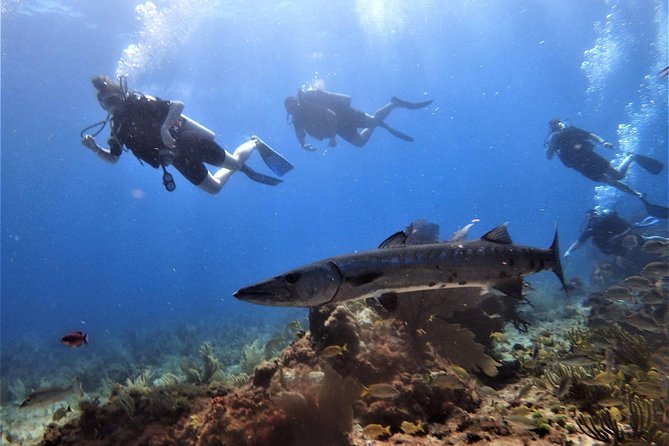
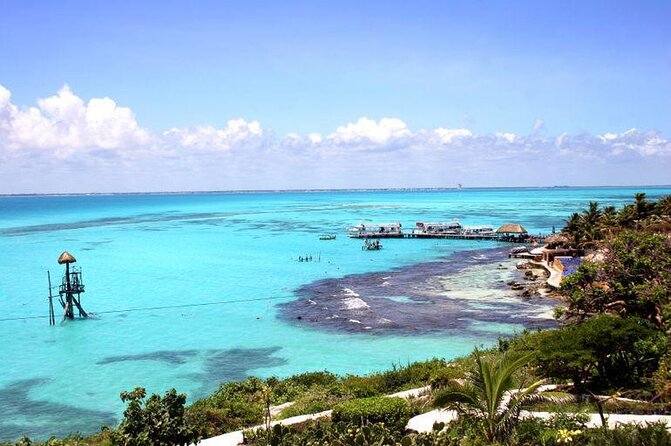
Once pool skills are in place, you move to the ocean for your open-water work at Blue Dive. The package includes boat transportation and the use of scuba equipment, so you’re not handling extra logistics.
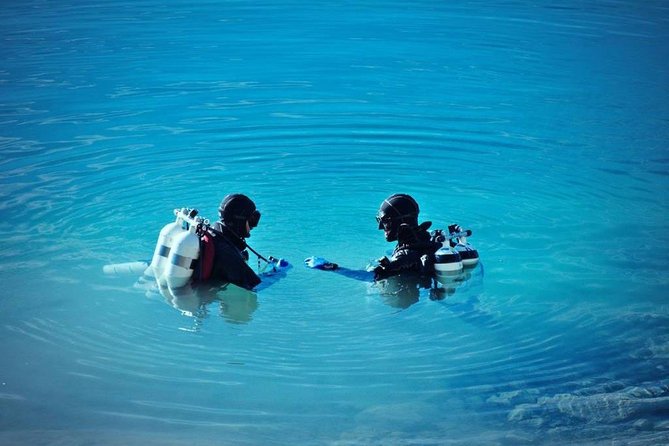
You’ll complete four ocean underwater sessions. That number is important because it usually gives you time to:
- get comfortable on the surface and during descent/ascent
- practice skills in a real-water setting
- work on buoyancy and control without feeling like every moment is a test
This is also where you’ll appreciate a multilingual instructor. The course is offered in English, but the staff is described as multilingual, which helps if you need clarity and extra explanations.
In the reviews, students also noted a one-on-one feel during slow season. While you can’t count on that every time, smaller groups and attentive instructors are real advantages. You’ll get more chances to ask questions like: What should I focus on right now? Is my breathing okay? Am I holding my body right?
Gear and materials: you handle skills, not headaches
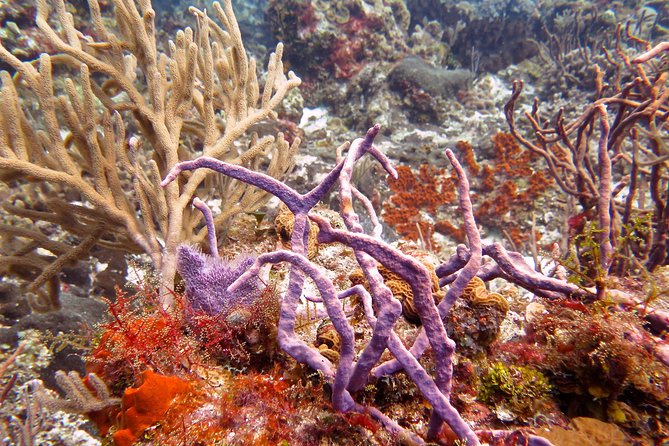
All fees and taxes are included, along with equipment and a digital manual. That’s a relief, because learning scuba already involves a lot of moving parts: mask, regulator, buoyancy system, and understanding how everything behaves when you exhale, inhale, and adjust.
Bottled water is included too, which sounds small until you realize how much you’ll appreciate it between sessions.
The instruction team is also a key part of the experience. One review calls out that the instructor was American, while the owner is Russian and speaks five languages. Whether or not that exact language mix applies to your group, the point is clear: communication quality matters when you’re learning safety procedures.
Who should take this course, and who should double-check first
This experience is open to most travelers, with a minimum age of 12 years. If you’ve been on the fence about getting certified, an Open Water course like this is the structured way to test if scuba is for you.
You should double-check your medical situation before you book. The course requires a health questionnaire, and some pre-existing conditions—such as asthma or heart conditions—may prevent you from participating. Also, diving within 24 hours of flying isn’t recommended, so plan your travel schedule accordingly.
If you want a calm pace, this course seems built for it. Reviews emphasize patience and a relaxed vibe, which is what you’ll want when learning buoyancy control for the first time.
The real takeaway: what you’re likely to gain beyond the card
Yes, you’ll leave with PADI Open Water Diver certification, and that card lets you go to depths up to 18 meters. But the stronger benefit is the training quality that gets you there.
When instruction is patient, you spend less time panicking about equipment and more time actually learning underwater skills. And when the course includes the full package—pool practice, ocean sessions, gear, boat transport, and certification—you’re not stuck doing “scuba homework” on your own.
The course also keeps the experience social in a good way. You’re in a small group (max 15), not a big production. That usually helps first-timers feel less like a spectator and more like a student.
Should you book Diversland for PADI Open Water in Cancún?
Book it if you want structured PADI training with hotel pickup, equipment, and boat transportation handled for you. The combination of theory, pool work, and four ocean sessions is exactly the kind of path that helps you build real confidence.
I’d consider a different option only if you know you’ll struggle with medical restrictions or timing rules around flying. If that’s on the table for you, talk to your doctor first and ask your provider about your situation.
If you’re a first-timer and you care about a calm, patient teaching style, this is the kind of course that’s worth paying for.
FAQ
What certification do I earn?
You complete the PADI Open Water Diver certification.
How deep can I go with this certification?
The Open Water Diver certification allows you to go to depths up to 18 meters.
How long is the course?
It’s listed as 3 days (approx.).
What time does the experience start?
Start time is 8:30am.
Does the course include hotel pickup?
Yes. Pickup is offered from all hotels in Playa del Carmen, Cancún, and Riviera Maya.
What’s included in the price?
Theory classes and pool practice, practice in the pool plus four open-water sessions, bottled water, all fees and taxes, the PADI certification, equipment, the digital manual, and hotel pickup/drop-off.
Is scuba equipment included?
Yes. The course includes use of scuba equipment.
Is diving insurance included?
No. Diving insurance is optional.
Is there a minimum age?
The minimum age is 12 years.
What’s the cancellation policy?
Free cancellation is available. You can cancel up to 24 hours in advance for a full refund, and cancellations under 24 hours before the start time aren’t refunded.