REVIEW · CANCUN
Cancun: Scuba Diving for Beginners, 2 Dives
Book on GetYourGuide →Operated by A' HA' Scuba Diving Cancun · Bookable on GetYourGuide
First time underwater in Cancun is easier than you expect. This 5-hour beginner program walks you from pool skills to two ocean tank sessions, including the famous MUSA Underwater Museum and a reef stop at Manchones. It’s built for people who want the real sea life feeling, without needing prior certification.
I especially like the small group setup (limited to 8) and the way you get calm, close attention while learning. I also love the two-site plan: the museum sculptures first, then a reef full of colorful fish and curious marine life at Manchones.
One thing to think about: you’ll pay an extra 500 Mexican pesos entrance fee on site, and you must be able to swim and perform basic scuba skills in the water. If you can’t safely complete those in-water skills, there’s no refund because the service is already delivered.
In This Review
- Key things to know before you go
- Your 5-hour schedule in Cancun (and why the timing matters)
- Pool skills and safety prep before you go under
- Two ocean tank sessions: MUSA Underwater Museum first
- The Manchones reef stop (where the fish make it feel real)
- Gear, gear fit, and the wet-day reality
- Entrance fee, photos, and what you really pay
- Who should book (and who should skip)
- Meeting point at Sotavento Hotel (how to avoid the morning scramble)
- Should you book A’ HA’ Scuba Diving Cancun for beginners?
- FAQ
- Do I need scuba certification to go on this tour?
- What’s included in the price of $167?
- What additional costs should I budget for?
- What time does the experience start and end?
- What should I bring?
- Is sunscreen allowed?
- Who is this tour not suitable for?
Key things to know before you go

- No certification needed: you learn basics in the pool, then use that training right away in the ocean.
- Two underwater destinations: MUSA Underwater Museum first, then Manchones reef.
- Limited group size: you’re not stuck as a number—guides can watch your skills closely.
- Gear and wetsuit included: BCD, regulator, mask, fins, plus a wetsuit and purified drinking water.
- Reef-friendly rules: sunscreen is not allowed, so plan clothing accordingly.
- Time-saver schedule: check-in 8:00 AM, boat leaves 9:30 AM, back at 1:00 PM.
Your 5-hour schedule in Cancun (and why the timing matters)

The day runs tight, which is good. You check in at 8:00 AM, then the boat departs at 9:30 AM, and you’re back at the dock by 1:00 PM. That gives you a full morning of training plus two ocean sessions without burning your whole vacation day.
The pacing also helps first-timers. You’re not thrown straight into cold nerves and waves. There’s theory, pool practice, then the open water in two distinct chunks—museum first, reef second.
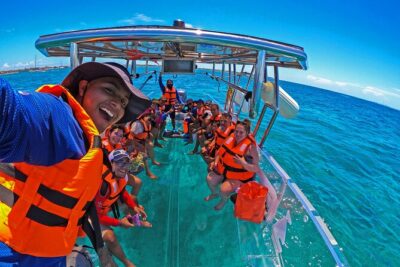
You’ll want to be mentally ready for water time, then a quick return to shore. Some people find they feel chilly or wet for a while after; plan for that and don’t count on lots of dry space on the boat. A few reviewers noted there are snacks and water on board, which helps keep energy steady while you wait between steps.
You can also read our reviews of more scuba diving tours in Cancun
Pool skills and safety prep before you go under
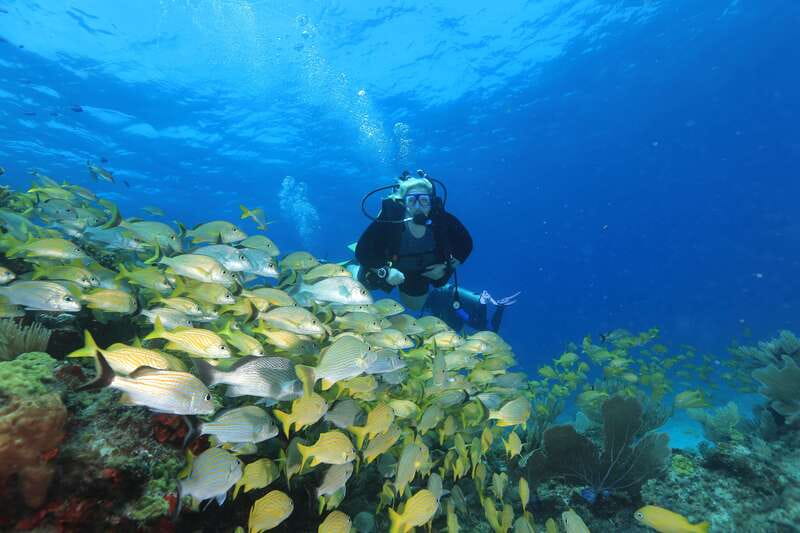
This program starts the right way: short theory, then real skills practice in a pool. Before you even get in the water, you fill out a short medical form. That matters because scuba has clear limits for certain health conditions, and the day is designed to keep everyone safe.
In the pool, you’ll learn how to handle the basics—equipment use, breathing basics, and the key water skills you’ll need later. You’ll also practice emergency-style moments like dealing with water in your goggles and what to do if something happens with your gear.
One detail I really like is how guides keep it practical. Instructors such as Marin and Lorena are repeatedly described as calm and patient, especially when people get nervous equalizing their ears or feel a bit panicky at first. That matters because first-timer fear is normal. What you want is someone who can keep you breathing and thinking instead of rushing you.
Language support is also a plus. The instruction is available in English and Spanish, and guides are known for clear explanations. For many beginners, that means you understand the hand signals and safety steps before you ever float over a reef.
Two ocean tank sessions: MUSA Underwater Museum first

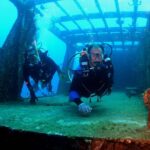
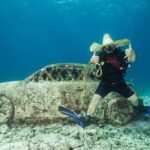
Your first open-water session takes place at the MUSA Underwater Museum. This is the big draw, and you’ll see why fast. The museum’s underwater sculptures are covered in marine life, so you’re not only looking at art—you’re watching it become habitat.
This site also works well for learning. The setup gives beginners a chance to focus on comfort and control while still experiencing something jaw-dropping. Many people mention strong visibility and vibrant clarity, plus lots to look at: marine growth on the statues, fish cruising close, and larger animals that show up if you keep your eyes open.
If you’re nervous, start by using the guide’s routine: look where they point, slow your movements, and keep your breathing even. Reviewers mention guides staying close and checking in regularly, which is exactly what you want when you’re learning buoyancy and staying relaxed.
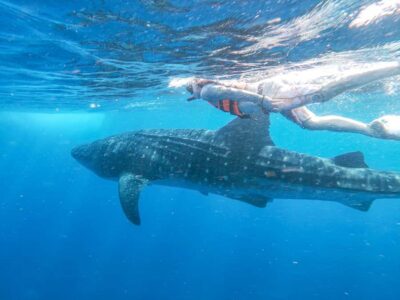
What you might see around the museum area can include turtles and stingrays, and people also report sightings like lobster, barracuda, and even sharks. Your exact animals depend on the day, but the overall point stays the same: MUSA gives you both structure (statues to orient around) and life all around you.
The Manchones reef stop (where the fish make it feel real)

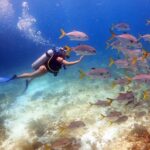
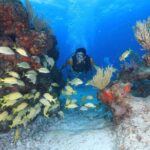
Your second tank session is at Manchones reef. If MUSA is the wow-art moment, Manchones is the wow-living moment. This is where colorful reef fish show up, and you can spend time scanning the reef without feeling like you have to race to the next landmark.
People describe this stop as full of activity—starfish on the bottom, corals and reef structures you can actually enjoy, and fish that move like they’ve learned the schedule. Some reviews even mention nurse sharks and other bigger animals, along with turtles, which adds that full Cancun sea-life payoff.
One practical benefit of doing two sites is perspective. After learning basics at pool level, you go to MUSA, then you go to a reef with different terrain. You get to practice skills again without feeling like the day is over after the museum. It also makes the whole experience feel longer underwater than a single-site trip.
Gear, gear fit, and the wet-day reality

The price includes full scuba equipment: BCD, regulator, mask, and fins, plus a wetsuit. That’s a big value point because you don’t have to hunt down rentals or worry about buying the wrong gear.
A few practical comfort notes from real beginner feedback:
- Expect things to get wet. Even if the boat has some overhead space, you’ll want a plan for damp towels and clothes afterward.
- Bring your basics: swimwear, a towel, comfortable clothes for afterward, and your passport or ID card.
- Sunscreen is not allowed. This isn’t a small detail. If you’re worried about sunburn, think about clothing that covers you instead of sunscreen.
Some people also recommend thinking about seasickness. Multiple reviews mention that a few people felt sick on the boat ride, so having a motion-sickness plan can be smart, especially if you’re sensitive to waves.
Boat logistics can matter more than people think. One review noted there’s a restaurant on site, clean bathrooms, and even showers, which helps if you’re lingering on the property before or after. Another person mentioned a nearby 7/11 just in case you forgot something minor—always helpful when you’re traveling.


Entrance fee, photos, and what you really pay

The advertised price is $167 per person, but you should know what that includes—and what’s extra.
Included:
- Theory lessons and the pool session
- Two tank sessions (one at MUSA, one at Manchones)
- Full gear (BCD, regulator, mask, fins) and wetsuit
- Purified drinking water
Not included:
- Entrance fee: 500 Mexican pesos per person
- Photos and videos (optional)
- Transportation from your hotel
That entrance fee is worth factoring in early so you’re not surprised when you arrive. It’s also the kind of cost that makes sense for a museum underwater experience—this is the entry cost that keeps the site functioning.
For memories, photos/videos are optional. Several reviews say the photo/video add-on is a nice way to keep the day, and one person specifically mentioned an $80 photo package. If you hate the idea of fumbling with your hands underwater, paying for the media can be a low-stress choice.
Who should book (and who should skip)

This is a beginner-friendly day, but not everyone qualifies. You must be able to swim, and you must perform the basic scuba skills in the water. If you can’t do the in-water requirements for safety reasons, there’s no refund because the service is already provided as planned.
Age limits are clear:
- Minimum age 10
- Maximum age 65
Not suitable for:
- Pregnant women
- People with asthma, heart or brain problems, high blood pressure, lung lesions
- People with organ transplant, diabetes, epilepsy
- Anyone with surgery less than 1 year ago
- People with respiratory issues
- People who can’t meet the swim + skills safety requirement
So, if you’re generally healthy and comfortable in water, this fits well. If you’re unsure about equalizing or you tend to panic when you’re out of your depth, it can still work—many first-timers described feeling supported by patient instructors like Marin and Lorena. But you’ll still need to show up able to follow instructions and stay calm enough to practice the required skills.
Meeting point at Sotavento Hotel (how to avoid the morning scramble)
You meet at Sotavento Hotel. The instruction is simple: when you arrive, ask for scuba diving and you’ll be waiting by the pool area. Sotavento is behind Calypso Hotel, which can make it easier to orient if you’re checking on foot.
This kind of meet-up is one of those small things that can ruin a day if you’re late or confused. So give yourself a buffer—especially if you’re traveling from a hotel that requires a short walk. Also bring your ID, because the form and check-in process needs it.
Some people also mention the team using WhatsApp to share reminders and what to bring, which helps you show up ready instead of hunting for a towel at the last second.
Should you book A’ HA’ Scuba Diving Cancun for beginners?

If you want a first-time scuba experience that feels structured, this is a strong option. You get pool practice, safety coaching, and then two different underwater settings—MUSA and Manchones—so your day doesn’t feel like a single short stunt. The repeated praise for patient guides, small groups, and clear safety steps is exactly what you want when you’re learning something physical and new.
Book it if:
- You’re a true beginner with no certification and want hands-on training
- You want MUSA Underwater Museum plus a reef stop in one morning
- You appreciate close guidance and a small group pace
Consider skipping or thinking twice if:
- You’re not confident swimming or you know you struggle to perform in-water skills
- You have any of the listed medical conditions or you’re outside the age range
- You want hotel pickup included (transportation is not included)
My take: for $167 plus the museum entrance fee, you’re paying for instruction, gear, and two ocean sessions in a format designed for first-timers. If you’re ready to follow safety rules and take the pool practice seriously, this is the kind of day that can turn into a serious new hobby.
FAQ
Do I need scuba certification to go on this tour?
No. The whole plan is built for beginners without a scuba certification. You’ll do theory and pool practice first, then complete two ocean tank sessions.
What’s included in the price of $167?
Your price includes theory lessons, a pool lesson, two tank sessions (MUSA Underwater Museum and Manchones reef), full scuba equipment (BCD, regulator, mask, fins), a wetsuit, and purified drinking water.
What additional costs should I budget for?
Entrance fees are not included: plan on paying 500 Mexican pesos per person on site. Photos and videos are optional, and transportation from your hotel is not included.
What time does the experience start and end?
Check-in is 8:00 AM, the boat leaves at 9:30 AM, and you return to the dock at 1:00 PM. The full duration is listed as 5 hours.
What should I bring?
Bring swimwear, a towel, comfortable clothes, and your passport or ID card.
Is sunscreen allowed?
No. Sunscreen is not allowed for this activity.
Who is this tour not suitable for?
It’s not suitable for children under 10 or people over 65, pregnant women, non-swimmers, and people with certain health conditions listed in the safety notes (including asthma, heart or brain problems, high blood pressure, lung lesions, organ transplant, diabetes, epilepsy, or surgery within the last year).