REVIEW · CANCUN
Private Kiteboarding lesson in Cancun
Book on Viator →Operated by Kitesurf Mexico · Bookable on Viator
Kitesurf lessons in Cancun can feel like magic. Here, the magic is practical: flat, shallow water in the Isla Blanca bay makes it easier to stay safe and keep progressing. You get a private one-on-one setup with instructors who focus on real technique and quick feedback, whether you’re starting out or refining transitions.
What I like most is how learning is built around conditions that make sense for beginners and also useful for more advanced riders. The setup also includes jetski transport to and from lessons plus a private launch, so you’re not fighting logistics while you’re trying to learn.
One consideration: you’ll need to plan transportation to the Isla Blanca meeting point, and the session depends on good wind and weather.
In This Review
- Key highlights you’ll feel on day one
- Isla Blanca Lagoon: Why the water makes lessons easier
- Private one-on-one coaching: what you’ll actually work on
- Gear and jetski support: safety that feels built-in
- The 3-hour session: how it typically breaks down
- How to prepare so you learn faster
- Location and timing: meeting point, opening hours, and real logistics
- Value for money: where the “private” part pays off
- Who should book this private kiteboarding lesson?
- Quick FAQ for planning your Cancun kitesurf lesson
- FAQ
- What is the duration of the private kiteboarding lesson?
- Where does the lesson start?
- Is this a private activity?
- What language is the lesson offered in?
- Will I need my own transportation from Cancun?
- What kind of water conditions should I expect?
- What equipment is included?
- Do you get jetski transport during the lesson?
- How do weather conditions affect the experience?
- How does cancellation work?
- Should you book this private lesson in Cancun?
Key highlights you’ll feel on day one
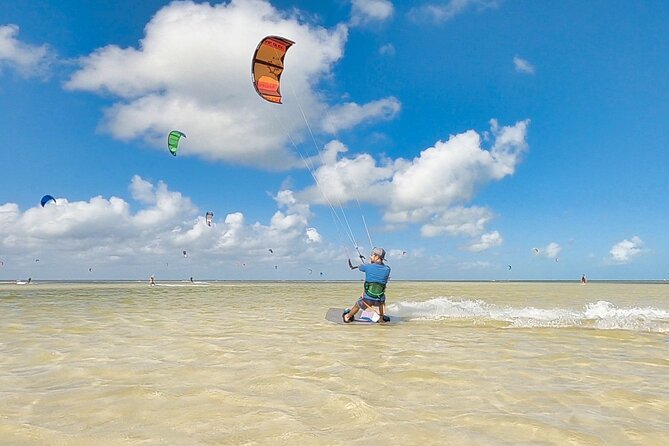
- Isla Blanca shallow lagoon for quick resets and steady practice
- Private launch so you’re not waiting on other groups
- Jetski transport and on-water rescue support
- Huge equipment selection and top-notch gear quality
- Instructors who fix small technique changes fast (including kite control and safety fundamentals)
- English instruction and a private group experience
Isla Blanca Lagoon: Why the water makes lessons easier
The lesson is in Isla Blanca, right by Cancun, and the big advantage is the water. The bay is described as flat and shallow, with consistent depth. That matters more than people think.
When the water stays calm and you can reliably get back up, you spend more time practicing skills and less time stuck in the “where do I go now?” phase. In kitesurfing, that’s the difference between feeling frustrated and feeling confident. You also get to repeat setups, board entries, and controlled attempts without the lesson constantly shutting down.
This is also why it works across skill levels. Beginners can focus on kite basics and body positioning in a forgiving environment. More experienced riders can work on refinement—like smoothing transitions—without being forced into survival mode.
You can also read our reviews of more private tours in Cancun

Private one-on-one coaching: what you’ll actually work on
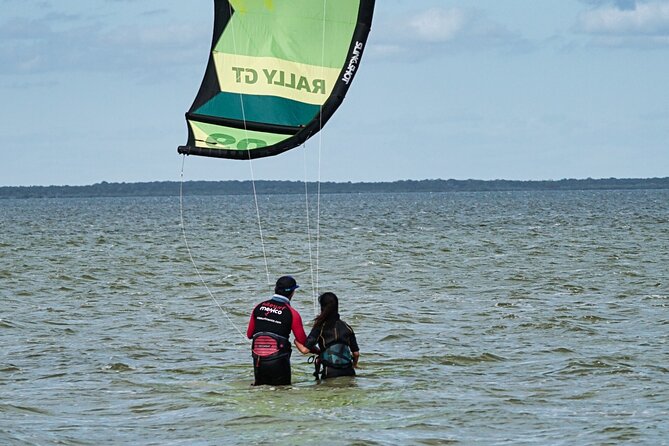
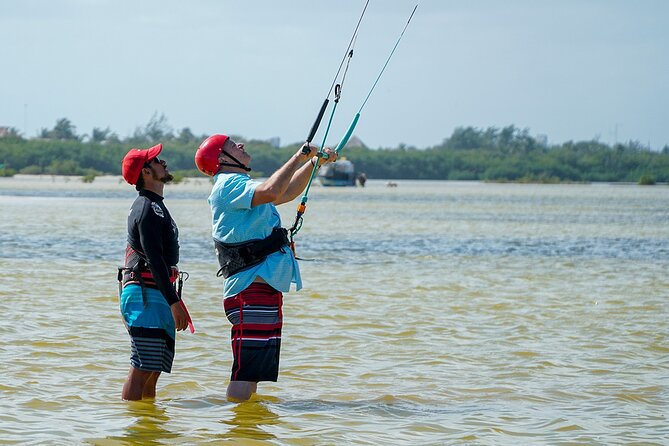
This is a private lesson, so your instructor can stay locked onto your needs. The experience is designed for all levels, which means the teaching approach changes depending on where you are today.
From instruction themes that show up again and again, you can expect the session to cover:
- Kite control fundamentals (so you’re not just launching, you’re controlling)
- Safety gear and safety operations (how to handle equipment and stay smart in the water)
- Getting on the board and staying functional once the kite is moving you
- Skill progressions tied to your level, including adjustments that make the next attempt cleaner
The name that keeps popping up is Gerardo, often praised for being patient and experienced, and for spotting the small changes that make a kiteboarder click. Other instructors mentioned in lessons include Gianpaolo (as part of the school’s leadership/operation), Adriano (clear safety explanation and confidence-building), Ananda (patient fundamentals and careful coaching), and Loic (help with transitions such as moving right to left).
That doesn’t mean you’ll have the exact same instructor—but it does tell you the school culture. They teach with structure: explain what matters, watch what you do, then correct one thing at a time.
Gear and jetski support: safety that feels built-in
The “huge selection of equipment” isn’t just a nice detail. It’s a practical advantage for a private lesson because the right gear can make learning faster and safer. You’re more likely to match kite/board choice to conditions and your current skill level.
Then there’s the operational support: the lesson includes jetski transport to and from the lessons and a private launch approach. In plain terms, it reduces the chaos that can creep into learning. You’re not scrambling to get where you need to be while your kite skills are still developing.
A calm-learning lagoon plus on-water support also helps you keep your head. If something goes wrong, you’re not left alone to troubleshoot at the edge of your ability. One thing I’ve learned from watching people progress in similar spots is that rescue support changes the entire tone of a lesson. It turns fear into practice.
Also worth noting: the school allows service animals, which can be important for some travelers.
The 3-hour session: how it typically breaks down
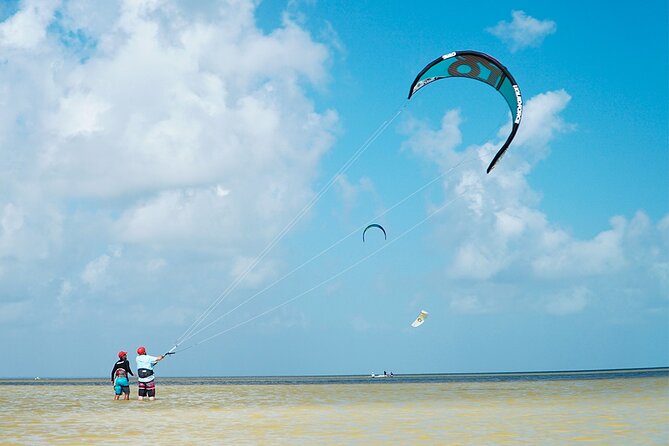
The experience is about 1 day / 3 hours (approx.). The exact flow can vary with wind and your level, but here’s a realistic picture of what you’ll do during a private lesson at this school, based on the instructional topics emphasized for their students.
1) Arrival and setup at Isla Blanca
You meet at Kitesurf Mexico – Cancun, Isla Blanca Kiteboarding and Wingfoil school. After you check in, the instructor will orient you to the session and confirm what you want to achieve. Private lessons move faster when you and your instructor share goals up front.
2) Safety briefing and gear basics
Expect the lesson to start with safety fundamentals and how equipment operations work. In other words: before you’re fully kite-up, you’re learning how to be safe when things get messy. Multiple instructors are praised for patient explanations of safety and kite handling, which is exactly what you want when you’re learning.
3) Kite control and getting comfortable
You’ll work on kite control in a way that matches your level. Beginners typically need extra time building smooth control so the kite behaves predictably. More advanced students usually spend less time on the “how does this work” basics and more time on technique cleanup.
4) Water practice with on-water support
Since the lesson uses jetski transport and a private launch, you should get launched and managed with purpose—not tossed into open chaos. The shallow, consistent water helps you attempt skills repeatedly without constant long swims.
5) Skill focus: from first board entry to transitions
Your session is tailored. Some students described gaining confidence quickly and progressing faster than in other learning areas. Others specifically highlighted transitions, including getting smoother moving from right to left.
6) Wrap-up and adjustment
At the end, you’ll get feedback on what to practice next. The best lessons don’t just show you what you did wrong—they point you to the one adjustment that will make your next session easier.
How to prepare so you learn faster
Even though the lesson is guided and supportive, you’ll speed things up with a couple of basics:
- Wear swimwear that stays put and isn’t going to distract you during harness checks.
- Bring a towel and a change of clothes for after the water time.
- Go in with at least a basic understanding of what you want (first board entry, smoother control, or cleaner transitions).
You can also read our reviews of more tours and experiences in Cancun





Location and timing: meeting point, opening hours, and real logistics
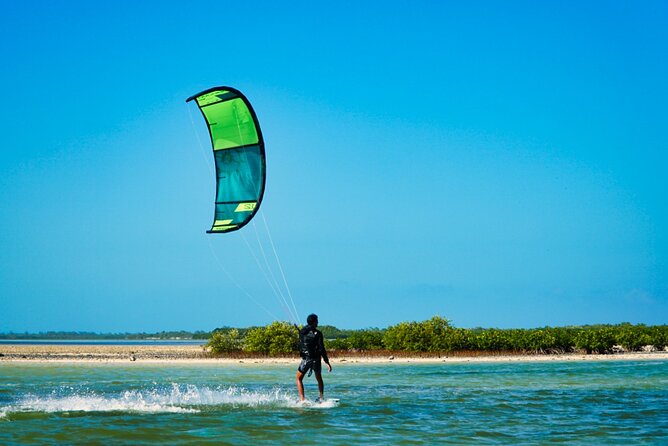
You’ll start and end back at the meeting point: Kitesurf Mexico – Cancun, Isla Blanca Kiteboarding and Wingfoil school, Isla Blanca, 77400 Cancún, Q.R., Mexico.
The school’s operating window is listed as 9:00 AM to 6:00 PM, seven days a week, with the activity running across a wide date range. Since this kind of sport depends on weather and wind, your exact start time matters less than whether the conditions are right on the day you book.
One practical note from real-world experience: you do need transportation from Cancun to reach Isla Blanca. The jetski is for on-water transport, not for getting you from your hotel. If your hotel is in Cancun’s Hotel Zone, plan a simple ride rather than hoping for an easy commute.
Value for money: where the “private” part pays off
I don’t care how pretty a location is—if the coaching is generic, you’ll stall. Here, the value is in the alignment between three things:
1) Conditions that reduce risk
Flat, shallow water and consistent depth help you reset fast and keep practicing. That’s a direct driver of progress.
2) Coaching that targets one thing at a time
Instructors are praised for identifying small changes needed for success. For you, that means less confusion and fewer wasted attempts.
3) Support that keeps the lesson moving
Jetski transport, rescue readiness, and private launch reduce friction. Less waiting means more actual practice during your limited time.
Also, this is an English-offered experience, and it’s a private group. That matters when you’re paying for instruction—your questions won’t get swallowed by a bigger group.
Who should book this private kiteboarding lesson?
This is a good match if:
- You’re a beginner and want a forgiving place to learn kite control and safety operations.
- You’re past the basics and want help refining technique, like smoother transitions.
- You prefer a calmer coaching style with direct feedback and patience (names like Gerardo, Adriano, Ananda, and Loic show up in strong student notes).
- You want a private experience rather than sharing instruction time with strangers.
It also lists a moderate physical fitness level requirement. That’s not a “gym” requirement, but kiteboarding does ask for mobility, balance, and comfort in the water.
Quick FAQ for planning your Cancun kitesurf lesson
FAQ
What is the duration of the private kiteboarding lesson?
The lesson is listed as about 1 day and 3 hours (approx.).
Where does the lesson start?
You start at Kitesurf Mexico – Cancun, Isla Blanca Kiteboarding and Wingfoil school in Isla Blanca, 77400 Cancún, Q.R., Mexico.
Is this a private activity?
Yes. It’s private, so only your group participates.
What language is the lesson offered in?
The lesson is offered in English.
Will I need my own transportation from Cancun?
You should plan transportation to the Isla Blanca meeting point. Jetskis are mentioned for on-water transport to and from lessons.
What kind of water conditions should I expect?
The lesson is set in flat, shallow waters with ideal safety conditions, including consistent depth in the bay.
What equipment is included?
The operator provides a huge selection of equipment, and equipment is a key part of the lesson.
Do you get jetski transport during the lesson?
Yes. Jetski transport to and from lessons is included, along with a private launch.
How do weather conditions affect the experience?
The experience requires good weather. If it’s canceled due to poor weather, you’ll be offered a different date or a full refund.
How does cancellation work?
You can cancel for a full refund up to 24 hours in advance. Cancellations within 24 hours of the start time are not refunded.
Should you book this private lesson in Cancun?
If your goal is real progress without spending your first hours fighting rough water or crowded logistics, I think this is an easy yes. The combination of shallow, consistent lagoon conditions and private coaching is exactly what helps new kiteboarders feel confident and what helps intermediate riders fix the small technique issues.
Book it if you’re willing to handle basic commute planning to Isla Blanca and you want a structured 3-hour lesson built around safety, control, and repeat practice. If that sounds like your kind of day, you’ll likely leave with a clearer kite plan for your next session.